Se afișează postările cu eticheta Tony Visconti. Afișați toate postările

duminică, 12 februarie 2012

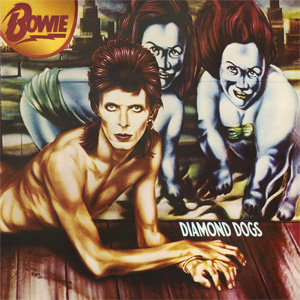
19.Diamond Dogs


         Diamond Dogs , recorded in late 1973 and early 1974, shows him at both most indulgent and his most creative.
         Although never really a critics' rave, the album remains one of those most admired by his hard-core following. It is the closest Bowie has ever come to the ideal of a totally theatrical pop music. Martin Kirkup commented: " Where Aladdin Sane seemed like a series of Instamatic snapshots taken from weird angles, Diamond Dogs has all the deeper colours. "
         With this album, Bowie proved that without Ken Scott,without Ronno and The Spiders, he was still able to produce work of real quality.
         Diamond Dogs was also important in that it saw him working again with then ex-chum Tony Visconti.
         During the time Visconti was concentrating on Bolan, he was watching Bowie's career unfolding : "Hunky Dory made me jealous. I had nothing to do with it, but I asked myself, Where were the songs like that when I was producing him?"
         The themes of urban decay, decadence and the apocalypse, which are the main ideas on the album, are given a psychosexual twist. He envisaged a world in which snaggle-toothed ragamuffins dressed in looted furs and diamonds took over the city. The principal character, Halloween Jack, and his gang live on top of deserted skyscrapers and travel around the city on roller-skates. Bowie says he drew inspiration for the characters of 'Hunger City' from a story told to him by his father, who worked for many years for Dr Barnado's. 

Tracks:

Side one
  1. "Future Legend" – 1:05
  2. "Diamond Dogs" – 5:56
  3. "Sweet Thing" – 3:39
  4. "Candidate" – 2:40
  5. "Sweet Thing (reprise)" – 2:31
  6. "Rebel Rebel" – 4:30
Side two
  1. "Rock 'n' Roll with Me" (lyrics: Bowie, music: Bowie, Warren Peace) – 4:00
  2. "We Are the Dead" – 4:58
  3. "1984" – 3:27
  4. "Big Brother" – 3:21
  5. "Chant of the Ever Circling Skeletal Family" – 2:00

         The album begins with the track ' Future Legend', a spoken narrative describing a future urban apocalypse. It is a portrait of a city environment on the point of collapse, and its view of a dehumanised humanity, are indicators of Burroughs' influence.


         Diamond Dogs  is a trip into grotesquerry and seedy lowlife. The title track references Tod Browning, the maker of the then banned 1932 film Freaks, one of the most controversial movies ever made,starring, as it did, men and women with real-life deformities and rare medical conditions.


         The underrated 'We Are The Dead", with its creepy electric - piano opening, funeral pace and house-of-horrors imagery, is likewise graphically Gothic.  But it's the brazen drug-referencing that is most evident: "Is it nice in your snow-storm, freezing your brain? "


         In fact "Sweet Thing/Candidate/Sweet Thing (reprise)" is the real masterpiece of the album, and it's also my favourite track from the album (in fact,I'm not sure,I love the whole album). It's in moments like this, rather than in the big hit singles or the radio-friendly songs, that Bowie's reputation as a true pop genius resides.


        For '1984' , Alan Parker plays a brilliant Shaft-inspired riff, as Bowie warns "Beware the savage jaw/Of 1984"


        The ending of the album is also quite brilliant. "Big Brother",replete with fake horns, strummed guitar and a massive wall of sound builds an  astonishingly overwrought climax which echoes some of Bowie's earlier work on The Man Who Sold The World .


        Then the song dissolves into the astonishing "Chant of the Ever-Circling Skeletal Family", a truly mesmeric and frightening chant in five/four time . It's on of the greatest moments Bowie has ever committed to tape.


        Aside from these moments of grand experimentation in sonics and theatricality, Diamond Dogs also contained two of Bowie's best ever pop songs:  " Rock'n'Roll With Me", the single that never was,pointed, ever so slightly, towards the more soulful future that would be The Young Americans period.


        And then, there's rebel rebel , which reached a surprisingly lowly Number 5 after crashing into the Top 40 once place below that in the first week of release. The last of his bona fide glam singles, it was a manifesto for all the Bowie Boys and Bowie Girls: " You got your mother in a whirl  / She;s not sure if you're a boy or a girl" sums up early -70s gender-bending perfectly. Arguably Bowie's greatest-ever riff, it was a brilliant taster for the album proper.
        Bowie performed the new single on the Dutch Show Top Pop in February,whilst in Holland for a few days to work on the new album at a studio in Hilversum. With an added eye patch ( he had gone down with a bout of conjunctivitis), the Aladdin Sane meets pirate man look was the last time we would see the full crimson spiky Bowie haircut  ( if I were to choose,I'd say this is one of Bowie's sexiest videos.I love his hair here)


        The cover presents Bowie half-man/half-dog,and it;s one of Bowie;s most dramatic, and definitely most seedy covers ( made by the Belgian artist Guy Peellaert)
        Diamond Dogs brought the first phase of Bowie's career to an end. Released in April 1974, Diamond Dogs not only closed down Bowie's glam-rock period, but became glam-rock's epitaph.

        When he left the UK for the US in April 1974, the version of him on show was, on first inspection, a sartorially toned-down representation. The era of glitter and stack-heeled boots was indeed over,but the man himself was entering the most paranoid and out-there period of his life,a three-year period of chill, supercharged creativity. He redesigned his Ziggy cut into an epic flame-coloured parting,packed away the kabuki garb and reinvented himself as a sharply dressed soul boy in a suit. The gouster was born.


sâmbătă, 24 decembrie 2011

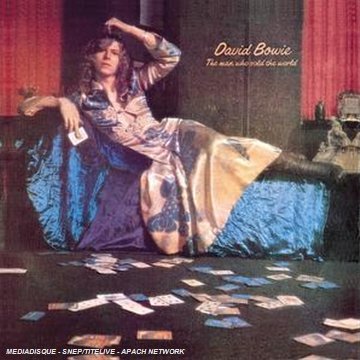
8.The Man Who Sold the World

The follow-up singles to 'Space oditty' were all commercial failures - 'The Prettiest Star','Memory of a Free Festival' and 'Holy Holy'.
Bowie's musical influences continued to be bizarrely eclectic,as Tony Visconti remembers :"It's no secret that he was always into The Velvet Underground.He also liked Van Morrison...He also liked that writer of 'Buzz The Fuzz'(Biff Rose),Jacque Brel ( the Mort Shuman English versions aswell),Ken Nordine,Marc Bolan'
Howver,the sound Bowie was developing both live and in the studio was becoming heavier,more focused and theatrical.The Man Who Sold The World ( released in Nov 1970 in the US and April 1971 in the UK),was decidedly more bleak and forbidding than the progressive chic of Space Oddity era.It's his most autobiographical work to date,it was also of real quality,a haunted piece of Gothic rock'n'roll,all sinister sgadings and bleak presents.
In an interview in 1993,Bowie spoke openly for the first time about the fear of insanity which hung over him in the 1970s and influenced a large proportion of his work : " There were far too many suicides for my liking - and that was something I was terribly fearful of. [...] As long as I could put those psychological excesses into my music and into my work I could always be throwing it off".

Content:
The Width Of A Circle
All The Madmen
Black Country Rock
After All
Running Gun Blues
Saviour Machine
She Shook Me Cold
The Man Who Sold The World
The Supermen


Against this background,the album's signature song has to be 'All the Madmen',which directly references his stepbrother Terry's plight ( he lived in the local asylum until his suicide in 1985).It empathises with him and contrasts the derangement of the internees with the corrupt values of a society which institutionalises madness.Lyrically,this is one of Bowie's most disturbing songs.Musically,the descant recorder gives the song a childlike dementia,like a seven-year-old's first music lesson turned evil.


'All the Madmen',like 'The Supermen',shows that the young Bowie was hip to Nietsche.Nietsche makes his madman rant and drool in the market square in a parody of the ravings of a demented preacher.
'After all' is the hidden gem on the album,a gorgeous melody with a somtach-churning merry-go-round synthesised section is the middle eight in waltz time.'After all ' is the first of Bowie's mini-manifestations for his chosen children,depicting himself and his flock 'painting our faces and dressing in thoughts from the skies'.With the line in the final verse,'Live till your rebirth and do what you will',Bowie is echoing the occultist teachings of the 18th and 19th century diabolist Aleister Crowley,whose maxim was 'Do what thou wilt'.Bowie seems to be envisaging a fan base of star-child occultists.


The much-lauded title track is lyrically Bowie's boldest statement yet of his sense of psychic unease.'The Man Who Sold The World' has a lilting melody,an almost bossa-nova-style rythm section.It was also covered in 1993 by Nirvana for their Unplugged session for MTV. 'I thought you'd died alone,a long,long time ago'.
'The Width Of A Circle' shows Bowie at his most daring.It containts Mick Ronson's most explosive moments on a Bowie album,as his lead guitar Kafkaesque transmogrification : 'Then I ran across a monster who was sleeping by a tree/And I looked and frowned and the monster was me'.
The closing track,'The Supermen',is just as sinister.The song is all towering spirals of sound.
The Man Who Sold The World depicts a world of almost satanic,neo-occultist perversion('The Width of a Circle'),a future hell in which the interface between man and machine has corrupted the species ('Saviour Machine'),where lust and dsire replace the sort of cosy,cliched,heterosexualised monogamy peddled by the pure pop tunesmiths of the 60s ('She shook me cold'.Bowie is haunted by the real possibility of his own personality shattering into so many constituent parts ('The Width...','All the Madmen','The Man Who...').
The album cover,which portays Bowie with flowing golden locks and wearing a full-length dress,is now a classic collector's item.Contrary to popular belief,the dress cover was never withdrawn from the US market because it was never actually used there in the first place.
Another interesting fact about the album is that the title was changed very late on in the day.The original title was Metrobolist.
The Man Who Sold the World also sounds so oddly formed and dark.The seeds of cyborg space-pop,later developed by the likes of the Futurists John Foxx,Gary Nauman,Bill Nelson and Thomas Dolby,are to be found on songs such as 'Saviour Machine'.The sort of childlike paranoia found on 'After All' and 'All the madmen' was a new form of Gothic melodrama,and a direct influence on Siouxsie and The Cure in the 70s and 80s,and America's Nine Inch Nails in the 90s.
Key to this bleak soundscape was Visconti and Bowie's desire to harness the newly arrived musical possibilities of the synthesizer.Visconti remembers : 'The synth was a passion of mine at the time'.


Howver,the actual recording of the album was a nightmare for the young Visconti.Accoding to Visconti,Bowie appeared distracted and undiciplined,spending more time with Angie in the lobby of the recording studio kissing,cuddling and cooing. ( 'naughty Uncle Tony says I have to do a vocal now.Bye bye Angie-wangie').Much of the music was 'arranged ' by Visconti and the band.
The album's protagonist was time and again arriving in the studio in a lyricless state,further driving the smoach-churned producer into a state of mild apoplexy.Visconti remembers : " Bowie was writing at the last minuste because (one),he wanted to,and (two) he was preocupied in the lobby of the studio with his new-found love,Angie."
The tactic of writing in the studio and coming up with lyrics for songs at the 11th hour may have fazed his friends,but Bowie was learning a new technique,which involved almost spontaneous last-minute assembly of a song's lyrical content in the studio.Bowie has never really been a concentional craftsman and,as his career progressed,he turned expediency into a tactic,developping a spontaneous creative environment.
The Man Who Sold The World worked well in artistic terms.As a commercial product,however,it was another near-fiasco,selling moderately for a while in the States,but disastrosly in the UK.Ronson went back to Hull to lvie with his parents and to work as a gardener.Moreover,shortly after the recording of the album,Visconti departed the Bowie scene to concentrate on his production work with Bolan.There was a number of reasons for Visconti quitting,but the main one was Bowie's business relationship with Defries.

____________________________________________

The Man Who Sold The World is one of my favourite albums ( you will hear this a lot from me,though!).My personal favourites are : 'All the Madmen' - I think the lyrics are phenomenal.This is one of the songs I always sing in class and annoy my classmates.The Man Who Sold The World is,lyrically,one of Bowie best works.The lyrics attracted me in the first place,and this is also one of the first Bowie songs I have heard.'Saviour Machine','She Shook Me Cold' and 'Black Country Rock' are relatively new to my "Loved Songs" section.

marți, 20 decembrie 2011

5.In the late 60s : Visconti,Bolan,Kemp,Hermione,Angela

By the middle of 1967,Bowie's career had reached something of an impasse.He had received some good reviews,but had negligible sales.It was at this time that he met one of the most important figures in his career,Brooklyn-born would-be producer Tony Visconti.
Here's a pic with both of them ( though it's form the 70s).


In Visconti,Bowie had found a friend who shared similar interests and who was,very importantly,an American,and therefore by definition rather cool.However,the change of producer from Vernon to Visconti had no immediate impact on Bowie's fortunes.
David Bowie was a natural convention-breaker.Personal style,and its articulation through dress,was central to this revolt.In 1997 he said: " And outfit is an entire life experience.An outfit is much more than just something to wear.It's about who you are ,it's a badge and it becomes a symbol".Even at school Bowie was a stylishly rebellious dresser,then,as now,something of a shoe fetishist : he was one of the first to wear what have now become known as winkle-pickers.


During the late '60s,he developed a rather uneasy friendship with Marc Bolan,that was a mixture of mutual respect and bitchy rivalry.


They were both often at Visconti's flat in Earls Court for many musical soirees.Marc Bolan,who was married,used his apartment about three nights a week to bath,and so did his wife.Bowie often used his flat as a place to bring girlfriends back.
Mod fashion was very important to both Bolan and Bowie.The first mods in the early 1960s were dangerous modernists: they wore expensice suits,lipstick,blusher,and eye shadow.They were yet another scion of gay subculture and sartorially part of glam's forbears.
Both Bowie and Bolan would hang around the chich joints of swinging London,raigind the dustbins of Carnaby Street for any discarded seconds which could be salvaged for nigh-time clobber.
Here you can listen to David Bowie's story about meeting Marc Bolan:

In terms of personal style in the 1960s,Bowie for the most part followed,rather than set,fashion trends,although he was one of the first teenagers in Britain to have long hair.On 12 November 1964 he appeared as the president of the Society for The Prevention Of Cruelty To Long-Haired Men on the Tonight programme and told an amused Cliff Michelmore how members were being taunted for their sartorial excess.


The young Bowie lved all this taboo-breaking and flaunting of moral codes.He wanted attention,he wanted to be known,and,back in 1964,to be a man and to have long hair was one way of achieving this aim.


In 1965,Bowie was a mod,in 1966 and in 1967 a hippy,but by 1968 he had begun developing his own post-hippy,slightly feminised cool.In performance,Bowie demonstrated a theatricality that was,for the time,certainly out of the ordinary for British pop.
Under the tutelage of dancer Linsday Kemp,Bowie's innate love of the bizarre flourished widly.
Kemp's influence had less to do with the fact that Bowie attented some of his dance classes,and more with the fact that,by his very being,he increased Bowie's awareness of the bizzare.In 1997 Bowie said of Kemp: he lived on his emotions,he was a wonderful influence.His day to day life was the most theatrical thing I had ever seen,ever.It was everything I thought
Bohemia probably was.I joined the circus."
Bowie's first performance with Kemp and his partner Jack Brikett,came in Pierrot in Turquoise,at the OXford New Theatre on 28 December 1967.
Bowie went to mix rock and mime in the late 1960s,touring in early 1969 with Tyrannosaurus Rex (T-Rex) as an opening act and performing a mime called Yet-San And The Eagle,with 'Silly Boy Blue' as his backing track.
Visconti,about the friendship between Marc Bolan ( the lead singer of T-Rex) and David Bowie: " David was open to friendship but Marc was quite cruel about David's as yet unproven musical career.I think it was with great sadistic delight that Marc hired David to open for Tyrannosauurus Rex,not as a musical act,but as a mime."


Bowie had,undoubtedly,more false starts than any other superstar in pop,and his early work provides us with not even a glimpse of the greatness to come.However,in the 60s you were allowed to fail.Bowie would probably not have made it if he had started out today - record companies and managers would not stick with a consistently unsucessful,if talented,artist ( here we must give Ken Pitt the credit fot sticking with "his boy",despite year after year of commercial disappointments).
Bowie interested himself in Buddhism,befriended the Buddhist priest,Chime Youngdong Rimpoche,and,according to some sources,come close to becoming a monk himself.However,Tony Visconti,himself curious about Buddhism at the time,doubts Bowie took his own interest too seriously.

By mid 1967,Bowie had finally flown the parental nest,to lodge with Ken Pitt, taking the spare room upstairs in Ken's flat and coming and going when he wanted.Terry's mental ilness and schizophrenic episodes were becoming more harrowing,the general domestic situation was confininf,and Bowie needed space.During his residence chez Pitt,Bowie recorded a prototype rock musical,Ernie Johnson ,about a character who throwns a party to mark his intended suicide,planned for the next day.
Then as now,Bowie was a huge fan of new music.He was one of Britain's first Velvet Underground fans.
There are numerous unrealised,unflinished,unreleased and unreleasable tracks from this era,including a remarkable song recorded with The Riot Squat in April 1967 called "Little Toy Soldier" (Sadie's song) ,which tells the story of Sadie,who has a clockwork toy soldier who comes to life and whips her when he is wound up.One day the girl winds it up too much and it beats her to death.The song itself is basically The Velvet Underground's 'Venus in Furs',with some changes.

By 1968,so dire were his financial circumstances that Bowie was forced,on an occasional basis,into operating a photocopier at Legastar,and also to raise some cash,was forced into appearing a telvision ad for Lyons Maid 'Luv' ice creams,incidentally made by future Alien and Bladerunner director Ridley Scott.He then acted in a short silent film,The Image ,directed by Michael Armstrong,but with little impact.

Hermione Farthingal

In early 1968,Linsday Kemp was asked by the BBC to choreograph The Pistol Shot , a play by Pushkin.For the production ,Kemp chose Bowie and a beautiful red-haired dancer,Hermione Farthingale,to dace a poetic minuet.Very soon an item,the pair lived together.


Bowie's next project would be Feathers.
By the summer of 1968,the 21-year-old Bowie had set up home in a flat in Clareville Grove,London,with hermione.
His relationship with the classic "English rose",with long strawberry-blonde hair,high cheeckbones and 'Clodagh Rodgers' wispy folk vocal,and its abrupt termination in early 1969,apears to have had something of a devastating effect on Bowie.Farthingale ran off with a dancer and later lived abroad after marrying an anthropologist.
After the split,Bowie returned to live briefly at the parental home in Bromley.Later,he met Mary Finnigan,a divorcee with two children of her own to look after and she mothered Bowie too,during their brief affair.
Bowie moved in with Finnigan in the first half of 1969 and,much to her horrified amusement,took over the entire flat - a bass amp there,a twelve-string guitar there.A freelance journalist,Mary Finnigan was at the time working regularly for the Sunday Times as well for the underground newspaper IT.She therefore supported him financially for three months.Altough nominally her lodger,Bowie paid no rent or household bills.

The Arts Lab


He soon opened the Arts Lab,and gave it a suitably hippy-dippy name - Growth,and became moderately successful locally. Tony Visconti says: " What I liked about David's relationship with his Arts Lab was that it gave him a purpose...I admired his healthy attitude he had then."
Although committed to this grass-roots populism,Bowie never really fitted into the hippy underground.While the rest of his peers were into dope and LSD,Bowie was more into drinking bottles of barley wine and falling over outside the pub.In fact,on occasion,Bowie wouls lecture his audience at the Arts Lab about the dangers of hard drugs.Apart from cannabis tincture,which seemed to be particularly fond of at the time,Bowie was into alcohol.

Mary Angela Barnett

But life in Beckenham was far from uneventful.Following a trip away,Mary Finnigan returned to her flat to fint it,quite remarkably,spotlessly clean and well ordered. (According to Finnigan,the young Bowie was incredibly untidy).She had been usurped by a certain Mary Angela Barnett.
Mary Barnett,or Angie as she was known,was born in 1950 in Xeros,Cyprus,of American parentage.She met David while bot were dating the same lover,Calvin Mark Lee,who was working as an A&R man for Bowie's new record company,Mercury records.
Angie was attractive,actively bisexual,extravagant,prone to huge self-dramatisation and scene-stealing faints,tantrums and collapses.She also had aspirations of becoming an actress and a movie star.
http://www.5years.com/angie11.jpg