Se afișează postările cu eticheta america. Afișați toate postările

marți, 21 februarie 2012

20. The Gouster

   A. Carlos Alamar   
        Bowie had already made before several attempts to crack the States,but he was far from being a household name.
       Bowie loved the contemporary black music of the day, and was also intrigued by the Latin emanating from the clubs of New York, obviously being tired of the rock scene.
       In spring 1974 Bowie met a man who would act as his guide to black music, and would also be his band leader for the next 14 years: Carlos Alomar, a New Yorker of Puerto Rican extraction.


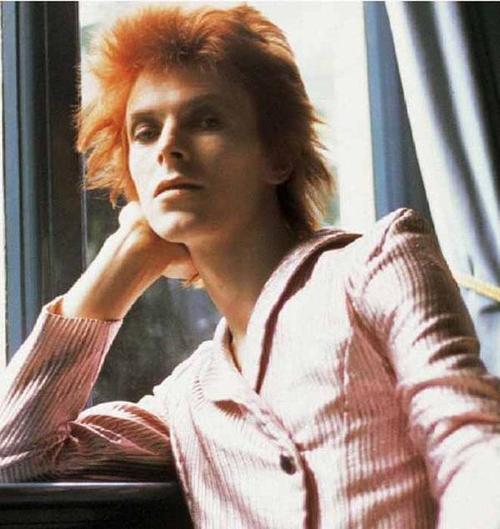
       Alomar was good-humoured, calm, jokey and light. He was the bridge between Bowie's pop/rock glam phase and the 'plastic soul' of the mid- 1970s. To Alomar, back in 73-74, Bowie was an alarming creature to behold: " When you see a man so nasty white with red hair, don't you think that's strange? The glam rock that he was known for was a completely different circle than that he was putting himself into. I told him: " What you need to do is to come to my house and my wife can make you some nice chicken and rice and beans and put some meat on those bones! " And surprisingly, he said: " Sure".
       Alomar was less than impressed with Tony Defries : " He was extremely intimidating. Defries was not fun. Defries was a guy who would try to pull the wool over your eyes. He was also non-moving. He was not giving in any negotiation. I didn't like Tony Defries at all. "

B. Corinne Schwab

       Bowie would also then meet his future personal assistant - Corinne Schwab ( known as Coco) . The two are still together in a professional capacity over 30 years later.


       With Angie back in London, enjoying the glitterati of the Chelsea scene with the aid of PMA ( a drug also known as Pamela), Bowie turned to Coco for both friendship and help. At this time, 1974, Bowie's coke addiction was worsening. Bowie's drug use became very excessive very quickly. Drugs were somehow fashionable rather than a real need. Coco was Bowie's nurse, Bowie even dedicated her a song in 1987, Never Let Me Down . She proved an extremely competent charge d'affaires, who did in fact help keep him alive during those days of coke - driven paranoia.  Tony Visconti remembers: " Coco has been a very loyal, competent assistant to David. She was well educated and multilingual, and she simply did her job very well. ".
       Slowly, but surely Coco began taking on more and more responsibilities. One of David Bowie's insiders put it like this: " Her whole life revolves around David Bowie's affairs and it's a full-time job. She never seems to have anything outside going on much". 


C. Making David Bowie a star


       Tony Defries was committed to his artist. He was determined to make Bowie a superstar in America, and within 6 months, he had succeeded. The first stage was promoting the Diamond Dogs Tour in the spring of 1974, by TV and radio commercials,Billboards,and so on. The second stage of MainMain's "Operation Bowie" was,of course, the tour itself. The Diamond Dogs tour turned out to be the most theatrical rock tour ever mounted. In fact,in its daring and visual audacity, it has probably never been rivalled since.
       This was basically a one-man show ( the main character is Halloween Jack) , with just two dancers, Guy Andrisano and Warren Peace, to provide on-stage action. During the shows the two dancers, who doubled as backing vocals, lassoed Bowie. For Time ,Bowie sang enclosed in a gigantic hand, which opened as the song started. For Sweet Thing  he sang atop a bridge , whilst,for Space oddity he seemed to have discovered the gift of flight. Hunger City, a crumbling post-nuclear holocaust city with atomic bomb-blasted skyscrapers of molten steel, would be recreated at huge expense for an astonished public.


       Bowie planned a film version of the album, but the plan was never realised. " Diamond Dogs is the last rock'n'roll group " Tony Visconti told Radio 1 in 1976: " In one version of the song, the dogs actually eat people, or they kill people on stage, or they shoot machine guns back into the audience. He has these horrible visions of the apocalypse, the end of civilisation as we know it" . 
       It was Bowie's most difficult performance to date. The ability to project both a technically proficient and engaging vocal was more important than ever, and around this time Bowie developed a new, richer, full-throated vibrato.
       Another change in the band was the replacement of Mick Ronson with Earl Slick. He was brought to Bowie's attention through Michael Kamen, the Bowie's tour musical director, who had worked with Slick previously. Although Slick was delighted with the gig, he was less than delighted with the money offer : "I took the shitty money - $300 a week. The money was disappointing. I was making more money playing bars at the time". 
       
       The tour opened on 14 June at the Montreal Forum, Canada. There then followed a gruelling 37 shows in 27 days with one day off and one matinee performance in Toronto. Following a road accident after the gig performance in Atlanta, the tour continued with only half of 'Hunger City' , as the set had been damaged.

       He was sued by some members of his band because of the low money they received. Bowie himself was having massive financial problems of his own. He found out in July, much to his utter horror, that he did not,in fact, own half of MainMan, as he had thought all along, and that his stake in the whole Defriesian empire amounted to a pittance . It's important to mention that Bowie was financing the tour out of his own income.
       Tony Visconti says:  "I don't know how Mainman worked. I wasn't part of it,except that they had more employees than they needed and lots of the running costs were charged to David,not Defries. this is what ended their working relationship. "

duminică, 12 februarie 2012

14.The American Tour

I looked at the way Bowie presented himself in that whole 72-73 period and I just thought ,and  i still do to this day, that it was the greatest rock'n'roll star image that there has ever been
 Gary Numan 1998          

            In the autumn of 1972, Bowie set sail for the States. Already the biggest pop star to have emerged in the UK during 1972, it was vital that the holy grail of American success came Bowie's way. The Bowie contingent were on a high, full of hope, and sure that American success was just around the corner.
            One aspect of British pop that had completely failed to grab the Americans' attention was its androgyny. Whereas Britain has had an arty wing of lipstick-glossed rockers since the 1970s, America has, despite the early intervention of Little Richard, been very late in developing the tradition (with the Smashing Pumpkins, Nirvana, Nine Inch Nails or Suede)
            It's usually only a certain type of act that can clean up the dollars. In the 1970s, Elton John's high musical values in the studio and showmanship on stage made him the biggest-selling British artist there, with Rod Stewart not far behind. The largely anonymous Mick Jones sang his way to multi-dollar success,as did Fleetwood Mac,who were at least half-British. But the likes of art rockers Roxy Music went largely unloved. Bolan had had some limited success, but he was hardly a big star. Intensely competitive and driven, Bowie was determined to go one better.
            Back to the tour, Angie was an unwanted distraction on tour - after causing a disturbance in a hotel pool with one of her affairs late at night during a tour of the Southern States she was packed off home. From that moment on, Angie was never an integral part of Bowie's touring regimen. The cracks in the Bowie marriage were already beginning to show. Both were massively promiscuous, and when both started to parade their affairs in front of each other's noses (and then to make love to each other's friends), jealousy started to rot their 'open' relationship. Angie, convinced that Bowie and MainMan would make her a star, became increasingly disillusionated when the focus resolutely remained on her husband. 
            Despite generating a fortune for his record company and manager, the artist himself lived on advances, handouts and credit in rented accommodation in the UK, and hotels and apartments abroad. He lived in the myth of being David Bowie, driven, almost maniacally, from album to tour to album by a cold, indomitable will.
            Bowie's friends and workmates noticed him becoming more distant, and perhaps less friendly. Reminiscing in 2004, Bowie remembers feeling "displaced" : "There was a time when what I was doing...didn't seem to resemble anybody else was doing. I didn't understand what I was doing, but it just seemed out of touch with what everyone else was doing."
            Travis Bolder recalls: " We only saw him as we walked on stage. He separated himself from us towards the end, he was like a solo artist that didn't need us. The bigger he got, the bigger his head got, and the less important you were to him".
            Bowie signed an employment agreement with MainMan management and production company in September 1972 that assigned to Defries a 'timeless' term of office as Bowie's manager. Under the terms of agreement, Bowie was given a guaranteed allowance of 300 £ . In return, he'd signed his life away. Mainman had exclusive rights to Bowie's person and could also 'fictionalise' the singer's biography for press purposes. In effect, Mainman could tell a pack of lies about Bowie and he would have no comeback.
            By late 1973, as Ken Scott recollects, Defries' influence over Bowie was all-encompassing: " It was difficult to tell how much was David and how much was Defries"
            The MainMan days were possibly the most controversial of Bowie's career, involving as they did a hugely extravagant 'shagathon', with Bowie largely broke, and his wife Angie running up colossal debts in shoe shops and boutiques while desperately trying to cut as an actress ( she was later notably turned down for the lead in Wonder Woman)


            Friend and photographer Mick Rock puts it like this:
"It was part of the theatre to treat him like a star. Defries could then start talking about David having an exclusive photographer.  People were saying, 'David Bowie's got an exclusive photographer.Who the fuck is David Bowie?' The people reasoned: 'If he's got an exclusive photographer and bodyguards, there must be something going on. ' That was a piece of living theatre, if you like, part of the whole thing that Tony and David cooked up between them".


            Ken Scott remembers:
 " Defries made a fortune for himself! Bowie was completely stiffed by Defries and when something like that happens, you just pass it on, it's a fact of life.... Bowie got completely stiffed by Defries and he passed it on to others. Bowie had to become tight to survive and he just kept it going because he certainly wasn't tight to start with. Bowie was broke! He was putting on these incredibly extravant tours and he was paying for them completely out of his 50 per cent. it was completely unheard of! "


            The personality of Bowie's band was changing rapidly. The whole Bowie entourage was becoming considerably more weird than Bowie himself - he has just hired a new pianist, Mike Garson ,which was a scientologist.
            This general unrest among the ranks came at a time when Bowie was called upon to deliver new product, the first album to be written from a position of fame. In many cases such albums are either a frightened excursion in water-treading,with the artist cowed into giving the punters more of what they know ( the boring option and one preferred by artist too numerous to mention) , or a confused melody of paranoia and unhappiness in an interesting gee-it's-hell-at-the-top-having-all-this-money sort of way. For this new album, Bowie chose the second option, but fashioned the paranoia of the superstar into a fantastically innovative record.

vineri, 30 decembrie 2011

10.Andy Warhol and America


   With hindsigh,1971 was the year in which Bowie became something of a pop-art agent provocateur.What really fired him was the desire to be different,radically different,to challenge and overturn both  dominant musical conventions and the moral and sexual codes of his day.
    Bowie did indeed tart up his art in a radical and shocking manner.Linsday Kemp and his 1960s absurdist mime-and-dance troupe was an influence,and Bowie took a special interest in the Warhol scene too.For a promotional visit to the States in January 1971,Bowie took to wearing a man's dress,as designed by London's Mr Fish,and was threatened by a gun-toting redneck less than chuffed with the cut of Bowie's jib.
     During August,Bowie went to see Andy Warhol's Pork  at the Roundhouse,and befriended the cast of starlets,inlcuding several people who sould become apparatchick in MainMan,Tony Defries' management company: Tony Zanetta ( who would become Bowie's personal assistant),Wayne County ,Cherry Vanilla ( Bowie's future press agent),Leee Black Childers (his tour photographer),and the future president of MainMan Jaime Andrews.
    Bowie initially disappointed the The Pork crowd.Jayne County said of seeing Bowie on his club tour in early 1971: " We'd heard that David Bowie was supposed to be androgynous and everything,but then he came out with long hair,folky clothes,and sat on a stool and played folk songs.We were so disappointed with him.We looked over to him and said: " Just look a that folky old hippy!".
     "David was disappointing",said Leee Childers,"but we loved his wife,Angela Bowie.Angie was loud,she was pregnant,she was crazy,she was grabbing our crotches laughing it up,and having a good time."
    However,back in the UK,Bowie's stage performances were certainly causing more of a stir.As 1971 progressed,Bowie's sound became harder and harder.Anyway,everybody recalls that in the late 60s and earlt 1970s,Bowie was thought of primarily as a sonwwriter,eather than a performer. "Although very talented,he ended up making a career of being unsuccessful",remembers David Stopps (manager of the Friars Aylesbury venue).Stopps was also incredibly impressed with Bowie : " Bowie was fantastic".
    Rock acts like Bowie were as interested in breaking into the American market as they were in the UK.Bowie however,was naturally drawn to the fringes of American cultures and the likes of Iggy Pop,Lou Reed and Andy Warhol.
   In the autumn of 1971,he made a trip to the Factorz in New York.Bowie remembers Warhol as possessing a rather unearthly hue,his skin a preternatural waxy.On a personal level,the meeting itself was far from a howling success.Warhol apparently hated Bowie's tribute to him on the Hunky Dory  album,presented to him in the form of an acetate during the meet-and-greet,and was more interested in Bowie's shoes.


     In the Factory,Warhol constructed fame and made 'talentless' people into movie stars.Anyone could be a star (in only for fifteen minutes).
     In fact,Warhol and Bowie may be said to have shared many psychological states.Both had a morbid fear of premature death.With Bowie this manifested itself in a fear of being shot on stage,and the final Ziggy Stardust shows were redolent with references to his own mortality ( Time,My Death,Rock And Roll Suicide).Warhol only narrowly escaped with his life after being shot by Valerie Solanas,a radical feminist,in 1968.Both had an abiding fear of flying.Both had a consuming passion for notoriety and fame.Even their careers followed certain similiarities in trajectory.
     Warhol also 'reinvented himself',donning a wig to cover his baldness,changing the manner in which he spoke,the way he carried himself and his art and type.Perhaps most importantly,both Warhol and Bowie were unshamedly ' commercial ' in their art.Despite both men's link with the avant-garde,they flaunted the consumerism of popular art and eventually became businessmen themselves.Another major influence on Bowie and Warhol at the time came from the camp aesthetic,and its playfulness.
    This sense of playfulness,married with a Warholian sense of pop art,was relatively new stance in the earlt 70s,and the antithesis of commanding rock ideology at the time.So singers and performers,sometimes unwittingly,followed standards of excellence and decorum which,until Bowie,had never been fundamentally challenged before.For some writers in the 1970s,who totally missed the point,Bowie was all glitz and show,with no substance.